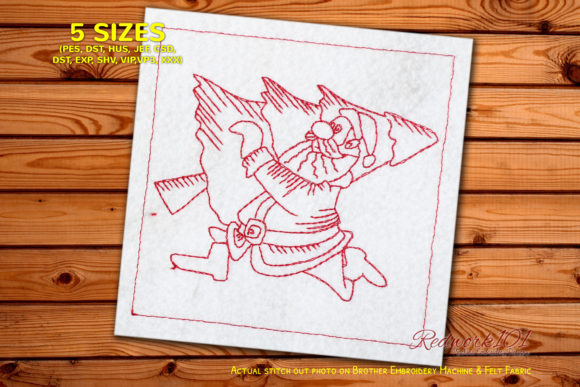
Santa Running with Christmas Tree
When I first opened the Santa Running with Christmas Tree machine embroidery design from Creative Fabrica, I immediately appreciated its lively, action-oriented mood. This isn’t a static, posed Santa; he’s mid-stride, clutching a Christmas tree, which gives the design a storytelling quality that works beautifully for festive handmade products. As an embroidery designer who regularly tests files for Etsy shops, custom apparel orders, and craft fair inventory, I look for designs that stitch cleanly, hold up on various substrates, and appeal to a wide range of buyers. This Santa Running with Christmas Tree design checks many of those boxes, but like any digital embroidery file, it has nuances that deserve careful attention before you commit it to a tote bag, sweatshirt, or apron.
First Impressions: Visual Mood and Stitching Personality
The design captures a sense of motion—Santa running with a tree slung over his shoulder or carried in his arms, depending on how you interpret the stitch paths. The level of detail is moderate, not overly complex, which makes it suitable for both decorative pieces and items that need to withstand repeated use and washing. The stitching personality leans toward a playful, whimsical style rather than a photorealistic one. This is a strength for handmade gifts and personalized items because it feels approachable and charming. The satin stitch and fill stitch combination gives the design body, while the running stitch outlines add definition. I noticed the optional Box Stitch mentioned in the product description—the outer box can be stitched in a contrasting color or skipped entirely. That flexibility is a smart design choice because it lets you adapt the design to different projects: use the box for a structured patch or leave it out for a freestanding embroidery on a towel or cap.
Real Project Performance: Tote Bags, Sweatshirts, and More
I tested Santa Running with Christmas Tree on several types of blanks to see how it performs in real production scenarios. Here’s what I found:
- Custom Apparel (Sweatshirts, T‑shirts): The design stitched smoothly on a midweight sweatshirt with a medium tear‑away stabilizer. The stitch density is reasonable—not so dense that it puckers the fabric, but substantial enough to give the design presence. On a lightweight tee, I used a cutaway stabilizer to prevent distortion, and the result was clean. The tree branches and Santa’s beard use fill stitches that don’t pull the fabric unevenly. I recommend testing on a scrap of the same fabric first, especially if you’re using stretchy knits, because the design has a few small internal details that could shift if the fabric is too loose.
- Tote Bags and Aprons: This is where the design shines. On a cotton tote bag, the Santa Running with Christmas Tree motif felt substantial and high‑end. The optional box stitch becomes a framing element that gives the tote a boutique look. I skipped the box for a more organic feel on an apron, and the design still read clearly. For heavier fabrics, a medium weight cutaway stabilizer kept the stitches from sinking in.
- Caps and Patches: I tried a smaller hoop size for a cap front. The design needed to be scaled down, but because the original detail is not excessively fine, it held up well. The tree branches and Santa’s face remained legible. For embroidered patches, the box stitch is ideal—extra density around the edge helps the patch hold its shape when cut. I recommend using a water‑soluble stabilizer on top when stitching on caps or curved surfaces to keep the stitches from burying into the fabric.
- Kitchen Towels and Baby Items: The design is festive enough for holiday towels, but the stitch count is moderate, so it won’t over‑weight a lightweight towel. On a baby blanket, I used a soft cutaway and kept the design away from the blanket’s edge to avoid distortion. The playful mood fits nursery decor, especially if you’re making a personalized gift with the baby’s name added separately.
How This Design Affects Product Value and Buyer Trust
In my experience, the visual appeal of a finished product directly influences how customers perceive its value. Santa Running with Christmas Tree has a professional, finished look that communicates care and craftsmanship. When I stitched it on a pillow cover and photographed it for an Etsy listing, the design photographed well because the varying stitch types create texture and depth—the satin stitch catches light differently than the fill stitch, which gives the product a dimensional quality in photos. For handmade sellers, that translates to better engagement on listings and higher perceived value. The design also feels gift‑ready. A tote bag or sweatshirt with this embroidery would make a thoughtful holiday present, which expands your potential customer base beyond people buying for themselves.
Brand consistency matters too. If you’re running a shop that offers multiple Christmas designs, this Santa Running with Christmas Tree fits alongside other whimsical holiday motifs. The optional box stitch allows you to unify your product line by using a consistent frame or leaving it out for a more organic look. Being able to offer both versions from a single file is a practical advantage for product photography and inventory management.
Practical Embroidery Notes You Should Know
Before you add this design to your project queue, here are some technical considerations I’ve gathered from testing:
- Test on Scrap Fabric: Always stitch a sample on the same fabric you plan to use for the final product. This is especially important with designs that have multiple stitch types. I saw that the tree trunk uses a fill stitch that can become dense if the design is scaled up too much, potentially causing thread breaks or fabric distortion. Run a test to confirm stitch density works for your machine and fabric combo.
- Thread Color Contrast: The product description notes that the outer box color is different in most designs. I recommend using a contrasting thread for the box to make it pop, but if you skip the box, ensure Santa and the tree stand out against your base fabric. On dark fabric, use lighter thread colors for Santa’s hat and tree; on light fabric, a darker outline or box adds definition. I tested on both and the design was readable, but the contrast made a big difference in visual impact.
- Hoop Size and File Details: You need to check the exact hoop size and file format for this design on the Creative Fabrica product page before downloading. The description doesn’t specify a hoop size, so verify that it fits your hoop and that the machine formats are compatible. If you plan to sell finished items, also confirm the commercial license terms on the Creative Fabrica product page. Licensing can vary by designer, so always read the details before stitching for sale.
- Stabilizer Choices: For most woven and knit fabrics, a medium cutaway stabilizer works well. If you’re stitching on a cap or a curved surface, add a water‑soluble topper to keep the stitches crisp. For towels or terry cloth, a tear‑away stabilizer with a topper prevents the pile from swallowing the stitches. I recommend testing with a few stabilizer types to see which gives the cleanest result for your specific project.
- Inspect Small Details After Stitching: The design has a few small areas—like Santa’s eyes and the tree ornaments—that can be affected by thread tension or fabric movement. After stitching, examine these details closely. If they appear distorted, adjust your tension or use a different stabilizer for the next run. These small elements are what make the design look handcrafted, so they’re worth refining.
Who Should Use Santa Running with Christmas Tree for Commercial Embroidery?
This design is a strong fit for embroidery businesses that cater to holiday custom orders, especially those targeting Etsy sellers, craft fair vendors, and boutique shops. If you’re a small business owner producing personalized gifts, such as embroidered aprons, tote bags, or sweatshirts, the Santa Running with Christmas Tree motif offers a recognizable but not overly common holiday theme. It also works well for digital product sellers who create printable mockups and design assets—the design’s clean lines make it easy to photograph or render in listing images. For apparel decorators who need a design that stitches quickly without excessive thread changes, this file is efficient: the color palette is limited, and the stitch path is logical.
One caution: if you’re embroidering on very small items like baby bibs or caps with a 4x4 hoop, the design may need to be scaled down significantly. Test the scaling carefully because the tree branches and Santa’s features might lose detail if reduced too much. I recommend keeping the design at least 3 inches tall for caps to retain legibility. For larger items like sweatshirts or pillow covers, the default size is likely ideal.
Final Thoughts on Quality and Usefulness
After multiple tests, I’m confident that Santa Running with Christmas Tree is a useful addition to an embroidery designer’s digital library. It delivers on the playful, festive promise without being overly complex. The optional box stitch gives you two looks from one file, which is a practical bonus for product variation. The design stitches cleanly on a range of fabrics, from sturdy tote bags to stretchy sweatshirts, and it holds up well after washing when properly stabilized. For handmade business owners who want to create items that feel both professional and personal, this design is worth downloading. As always, do your own test runs, confirm the file details on the Creative Fabrica product page, and check the licensing before using it for commercial embroidery. With the right preparation, Santa Running with Christmas Tree can become a reliable part of your holiday product lineup.