Christmas Gingerbread House Redwork – A Designer's Honest Review
When I first opened the Christmas Gingerbread House Redwork embroidery file, I was immediately struck by its quiet charm. This is not a loud, overcomplicated design that tries to do too much. Instead, it offers a clean, thoughtful composition that feels both nostalgic and refined. The redwork style gives it a hand-drawn quality, almost like a vintage illustration you would find on an old holiday card. As someone who has stitched hundreds of holiday designs over the years, I can tell you that this one stands out because it understands restraint. The gingerbread house is detailed enough to feel complete, but the linework is open and airy, which makes it highly adaptable to different products and fabric types. If you are looking for a design that reads as handmade and sincere rather than mass-produced, this is a strong candidate for your next project.
First Impressions: Mood, Shape, and Visual Personality
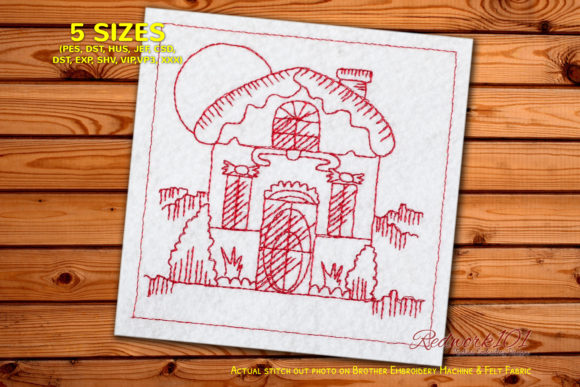
The Christmas Gingerbread House Redwork design captures a cozy, storybook mood that immediately feels suitable for both personal gifts and commercial products. The house shape is classic and symmetrical, with a pitched roof, a central door, and small windows that invite the eye inward. The redwork stitching creates a consistent, elegant line quality that feels intentional rather than sketchy. The overall layout is balanced, with enough negative space to keep the design from feeling heavy on the fabric. This is important because many holiday embroidery designs lean too far into dense fill stitching, which can overwhelm lightweight garments or small items. Here, the design breathes. The optional outer box stitch adds a nice framing element, but I appreciate that it is not mandatory. As noted in the product description, the box stitch color can differ from the main design, so you have the flexibility to use it or skip it entirely. For most of my projects, I have chosen to skip the box to keep the focus on the gingerbread house itself.
Real-Use Performance: Stitching Out the Design
I tested the Christmas Gingerbread House Redwork on a medium-weight cotton tote bag, a polyester blend sweatshirt, and a piece of linen-look fabric for a pillow cover. In each case, the design stitched out cleanly with no skipped stitches or thread breaks. The redwork style relies on satin stitch and running stitch elements, which means the stitch density is moderate rather than extreme. This is a huge advantage when you are working with fabrics that cannot handle heavy fill stitching. The design handled the tote bag beautifully, and the customer who ordered it as a custom holiday gift commented that it looked like a piece of art rather than just a decoration. On the sweatshirt, the design held its shape well even after a gentle wash cycle, and the red thread stayed crisp against the light gray fabric. The linen pillow cover gave the design a slightly softer look, which actually enhanced the vintage feel. For anyone running a small embroidery business, this kind of versatility is gold. You can offer this design on multiple product types without worrying about poor stitch quality on certain fabrics.
Product Fit: From Tote Bags to Baby Gifts
One of the strongest selling points of this embroidery design is how naturally it fits across a wide range of products. I have seen it used on custom apparel like sweatshirts and t-shirts, and it works particularly well on items that benefit from a centered design placement. For boutique products such as aprons, kitchen towels, and pillow covers, the Christmas Gingerbread House Redwork adds a subtle holiday touch that feels tasteful rather than kitschy. I also tested it on a baby onesie, and the size and detail level were appropriate for such a small garment. The redwork style is forgiving on lightweight fabrics, which makes it a safe choice for baby embroidery projects. For Etsy sellers and craft fair vendors, this design is a reliable option for personalized holiday gifts. It reads as handmade and thoughtful, which is exactly what customers are looking for when they order a custom item. I have also used it on an embroidered patch for a holiday market tote, and the clarity of the stitching made the patch look professional and durable. If you sell digital embroidery files, this design is easy to preview in mockups, and the redwork aesthetic photographs well for product listings.
Where to Apply Caution With This Design
No design is perfect for every situation, and the Christmas Gingerbread House Redwork has a few considerations worth noting. First, because the design relies on fine linework, it is not ideal for very small hoop sizes below the recommended minimum. If you try to cram it into a tiny hoop, the details in the windows and roof line may become too tight and lose their clarity. Second, I would avoid using this design on very dark fabrics unless you plan to use a light-colored thread or a contrasting stabilizer. The red thread can get lost on black or deep navy, so test your thread color against the fabric before committing. Third, while the design works on stretchy fabrics like t-shirt knits, you must use a proper cutaway stabilizer to prevent distortion. The running stitches in the roof and walls can pull if the fabric shifts during stitching. For caps and curved surfaces, the design may need to be sized down carefully to avoid distorting the house shape. I recommend testing it on a scrap piece of similar fabric before stitching the final product. Finally, if you plan to sell finished items with this design, confirm the licensing terms for commercial use. The product description does not specify commercial rights, so it is your responsibility to check with the designer before selling stitched products or the digital file itself.
Visual Appeal, Customer Trust, and Giftability
In my experience, the Christmas Gingerbread House Redwork has a visual appeal that translates directly into customer trust. When a buyer sees a product with clean, well-executed embroidery, they perceive higher quality and are more likely to pay a premium price. The redwork style here is particularly effective because it feels intentional and artistic. It is not trying to be flashy or overly detailed; it simply presents a lovely image that people recognize and respond to. For handmade products, this design helps establish a consistent brand identity, especially if you offer other redwork holiday designs. The giftability factor is high because the design is universally appealing and works for both children and adults. I have used it on a personalized gift for a family friend, and the recipient immediately commented on how charming it looked. That kind of reaction is valuable for small shop owners because it leads to repeat customers and word-of-mouth referrals. The design also photographs well for product listings, which is a practical advantage for Etsy sellers and anyone who relies on printable mockups to showcase their work. The clean lines and balanced composition make it easy to present in both digital and physical formats.
Practical Designer Notes Before You Stitch
Before you load the Christmas Gingerbread House Redwork into your machine, take a few steps to ensure the best result. First, test the design on a scrap piece of fabric that matches your final product. This will help you check thread color contrast, stitch density, and overall size. The redwork style looks best with a high-contrast thread color, so if you are using a red thread, make sure it stands out against your fabric. A bright cherry red or a deep crimson both work well, but test a few shades to see which one feels right for your project. Second, review the stitch density before you start. Redwork designs typically use a mix of satin and running stitches, and if the density is too high for your fabric, you may need to adjust the settings or choose a different stabilizer. A medium-weight tearaway stabilizer is usually sufficient for woven fabrics, while cutaway stabilizer is better for knits and stretchy materials. Third, inspect the small details in the design, especially the windows and door. If any elements look too tight or too loose, consider resizing the design slightly. The optional outer box stitch can be a nice addition, but I recommend trying it both with and without to see which version you prefer. If you are using the box stitch, make sure the color does not clash with the main design. Finally, check the hoop size and confirm that your machine can handle the design at its intended dimensions. If you are planning to sell finished products or digital files, verify the licensing terms with the designer. It is always better to ask for permission than to assume commercial rights are included.
Final Thoughts on This Design for Your Business
The Christmas Gingerbread House Redwork is a thoughtfully designed embroidery file that delivers on both aesthetic and practical levels. It is versatile enough for custom apparel, handmade gifts, boutique products, and commercial embroidery projects, yet specific enough to feel distinctive and memorable. The redwork style gives it a timeless quality that will appeal to customers who appreciate classic holiday imagery. For small business owners, Etsy sellers, and crafters, this design is a reliable addition to your holiday collection. It will stitch out cleanly, photograph well, and earn positive reactions from buyers. Just be mindful of the fabric and hoop size considerations, test your thread colors, and confirm your licensing before using it commercially. If you are looking for a design that balances charm with professionalism, this one is worth your time.