Christmas Super Cool Van Redwork: A Designer's Review
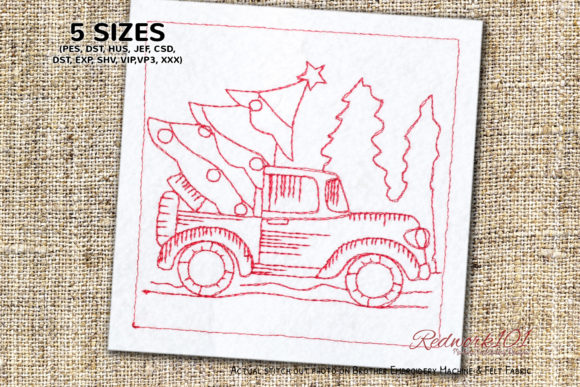
As an embroidery designer who has reviewed hundreds of machine embroidery designs for small businesses, I approached Christmas Super Cool Van Redwork with a practical eye. The name suggests a festive, playful vehicle motif rendered in redwork style, and the description notes that the box stitch is optional. This tells me we are working with a design that prioritizes clean linework, single-color efficiency, and a retro or whimsical feel. For small business owners, apparel decorators, and handmade brands, this design offers a specific kind of visual personality. Let me walk through how it performs in real commercial embroidery projects, from patches to caps to tote bags, and what you need to know before using it for your brand.
First Impressions: Friendly, Playful, and Handmade in Spirit
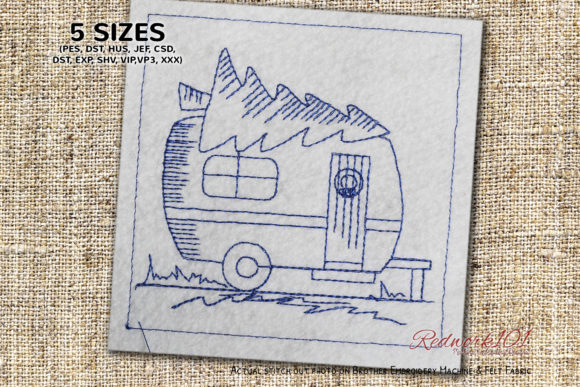
When I first looked at Christmas Super Cool Van Redwork, I saw a design that leans into a friendly, nostalgic, and slightly rustic aesthetic. Redwork embroidery traditionally uses a single thread color, often red, with simple outlines and open areas. This makes the design feel approachable, handmade, and charming rather than overly polished or corporate. For a small café, bakery, florist, or pet brand, that tone can be a strong asset. It communicates warmth, personality, and a sense of craft. The "super cool van" theme adds a lighthearted, retro vibe that pairs well with holiday-themed merchandise, but it could also work year-round if your brand identity leans playful. The optional box stitch gives you flexibility: you can frame the design for a patch-like finish or leave it open for a softer, more integrated look on apparel.
From a professional standpoint, the redwork style means the design likely has moderate stitch density and clear outlines. That is a good starting point for many business applications. It does not feel overly decorative or fussy, which matters when you want your brand mark to be readable at a glance. The first impression is that Christmas Super Cool Van Redwork could serve as a chest logo accent, a sleeve detail, a cap design, or a tote bag mark without overwhelming the product. It feels like a design that was made for small business merch, not just for seasonal decoration.
Business Use Cases: Where This Design Shines
In my experience, the best machine embroidery designs for small businesses are versatile, and Christmas Super Cool Van Redwork fits that description. Here are the primary ways I would recommend using it for custom apparel, branded patches, and merchandise.
Embroidered Patches for Uniforms and Merch
Because redwork designs rely on clean outlines, they translate well into embroidered patches. The optional box stitch can serve as a patch border, giving the finished product a defined edge. For a small business, patches are a low-cost way to add branding to staff uniforms, aprons, caps, or work shirts. A bakery could use this van design on an apron pocket, a florist on a tote bag, or a creative studio on a cap. The holiday theme makes it a natural fit for seasonal staff uniforms or customer gifts, but the van motif itself is not so heavily tied to Christmas that it cannot be used in other contexts. The redwork style keeps the patch production simple, especially if you stick to one or two thread colors.
Cap Embroidery and Curved Surfaces
Cap embroidery is always a challenge because of the curved surface and limited space. Christmas Super Cool Van Redwork, with its likely moderate stitch count and open linework, should perform well on a cap front or side panel. The design does not appear to have tiny, dense details that would distort on a curve. I would recommend testing it at a smaller size, around 2 to 2.5 inches wide, to see how the van shape reads. The redwork style keeps the visual weight light, which is important for a cap where you want the brand mark to be visible but not heavy.
Tote Bag and Apron Designs
For tote bags and aprons, the design can be used at a medium size, around 3 to 4 inches, to create a strong focal point. The optional box stitch adds a nice framed look that works well on canvas or cotton tote bags. For a small business selling handmade product labels or merchandise, this design could become a signature element. The redwork aesthetic feels natural on natural fabrics, and the single-color approach keeps production costs low. You can also experiment with thread colors beyond traditional red, such as a deep green, navy, or even a metallic thread for a premium feel, as long as the design remains readable.
Staff Uniforms and Work Shirts
On work shirts, chest logos are a standard placement. Christmas Super Cool Van Redwork can serve as a left chest embroidery that adds personality without overwhelming the garment. The playful van motif is a conversation starter, which is valuable for customer-facing businesses like a café, boutique, or pet supply shop. The open linework means the embroidery will not feel stiff or heavy on shirt fabric, especially if you use a lightweight stabilizer. I recommend testing it on a scrap shirt first to confirm the stitch-out quality.
Where to Use This Design Carefully
No embroidery design is perfect for every scenario, and Christmas Super Cool Van Redwork has specific considerations. Here are the areas where I advise caution.
Very Small Patch Sizes
If you plan to use this design as a tiny patch, say under 1.5 inches, the van details may become too dense or lose clarity. Redwork linework requires enough space for the thread to define the shapes. I would test the design at the intended size before committing to production. The van shape and any text or details inside the design need to remain readable at small scale. If you are making patches for hats or small product labels, ask your digitizer to check the stitch count and minimum size.
Dark Uniforms and High-Contrast Threads
Because redwork traditionally uses a single light color on a light or medium fabric, using it on dark uniforms requires careful thread color selection. A white or bright thread on a dark shirt can work, but the design may lose the soft, handmade feel if the contrast is too harsh. I recommend testing the design in black and white first to see how the linework reads. Also, consider using a thread color that complements your brand identity, not just standard red. The optional box stitch can help frame the design on dark fabric, but you need to ensure the overall look is cohesive.
Textured or Heavy Fabrics
Fabric texture matters. On heavily textured fabrics like fleece, sherpa, or thick canvas, the fine lines of redwork can get lost or distorted. The embroidery may not look crisp. I would stick to smoother fabrics like cotton twill, poplin, denim, or lightweight canvas for the best results. If you must use a textured fabric, increase the underlay or use a denser stabilizer to support the stitch-out. Always test on a sample of the actual fabric before production.
Items Needing Frequent Washing
Work uniforms and aprons are washed often. Redwork designs with open outlines can be more prone to distortion over time if the thread tension or stabilizer is not optimal. I recommend using a high-quality polyester or rayon thread that resists fading, and a cutaway stabilizer for garments that will see frequent washing. The optional box stitch actually helps here, because a border can protect the edges of the design from fraying. If you skip the box stitch, make sure the design has adequate underlay to keep the stitches stable.
Brand Identity, Customer Trust, and Perceived Value
From a brand identity perspective, Christmas Super Cool Van Redwork communicates approachability, craftsmanship, and a touch of whimsy. For a small business, that can be a strong differentiator. Customers associate handmade-style embroidery with quality, care, and authenticity. A well-executed embroidered patch or logo on a staff uniform or product bag signals that the business pays attention to detail. It builds trust and recognition, especially when the design is consistent across all merchandise.
The redwork style also has a nostalgic quality that appeals to customers looking for unique, handmade products. If your business sells handmade goods, artisanal foods, or vintage-inspired items, this design reinforces that aesthetic. It adds product value without requiring a complex, multi-color embroidery setup. The single-color nature keeps production simple and affordable, which is important for small businesses managing tight margins.
However, the playful van theme may not suit every brand. If your business is luxury-focused, minimalist, or corporate, a whimsical van design might feel mismatched. Consider your target audience and brand voice before committing. The design works best for businesses that want to feel friendly, local, and creative. A florist, pet store, bakery, café, children's boutique, or handmade craft brand would find it a natural fit.
Practical Embroidery Designer Notes
Before you use Christmas Super Cool Van Redwork for your commercial embroidery projects, here are the steps I recommend based on professional experience.
- Test in black and white first. Convert the design to a single-color outline and stitch it on scrap fabric. This lets you evaluate the line clarity, stitch density, and overall shape without thread color distractions. Adjust if any details are too thin or too dense.
- Check performance at small patch size. If you plan to use this as a patch, test at 2, 2.5, and 3 inches. Confirm the van shape and any text remain readable. The optional box stitch may need resizing to match the design proportion.
- Review thread color contrast. Choose a thread color that contrasts well with your fabric while maintaining the redwork feel. Traditional red is classic, but consider your brand colors. Test on the actual fabric to see how the color reads under different lighting.
- Inspect spacing and negative space. Redwork designs rely on open areas. Make sure the negative space inside the van and around the design is balanced. Crowded areas can cause thread breakage or poor stitch quality.
- Confirm hoop size and file format. Since specific details are not provided, verify the embroidery file format is compatible with your machine. Check the hoop size needed for the design at your intended dimensions. Ask your digitizer or supplier for a stitch count and size recommendation.
- Test on real fabric with proper stabilizer. Use a medium-weight cutaway stabilizer for most fabrics, or a tearaway for stable fabrics like denim. Always test on a sample of the actual garment or material you plan to use.
- Create a mockup for client approval. If you are producing merchandise for a client or for your own brand, use a printable mockup to show how the design looks on a shirt, cap, or tote bag. This avoids surprises and builds trust.
- Compare it beside other design assets. If you use multiple embroidered elements, ensure the style and scale of this design match your other branding. Consistency creates a professional appearance.
- Confirm commercial licensing before business use. The product description does not include license terms, so verify with the seller that the design can be used for commercial embroidery, especially if you are selling finished products. Respecting licensing protects your business.
Final Thoughts on Christmas Super Cool Van Redwork
For small business owners, embroidery shops, and handmade brands looking for a memorable, cost-effective custom embroidery design, Christmas Super Cool Van Redwork offers a strong combination of personality and practicality. The redwork style keeps production simple, the van motif is distinctive without being too niche, and the optional box stitch gives you flexibility for patches or standalone embroidery. It works well on caps, aprons, tote bags, work shirts, and staff uniforms, provided you test for size, fabric, and thread contrast. The design supports a friendly, craft-focused brand identity that builds customer trust and recognition.
As with any machine embroidery design, the key is to test thoroughly before production. Check the stitch-out, adjust the size, and confirm the design fits your brand's voice. When used thoughtfully, Christmas Super Cool Van Redwork can become a signature element in your small business merch lineup, adding warmth and handmade charm to every finished product.