Christmas Scarecrow Bluework: A Designer Review for Small Business Merch
As an embroidery designer who has reviewed hundreds of machine embroidery designs for small business merchandise, I approach every new embroidery file with a practical eye. I ask not just "does it look good?" but "will this work on a cap, a tote bag, an apron, and a patch?" When I first examined Christmas Scarecrow Bluework, I was curious about how a scarecrow motif would translate into commercial embroidery and branded patch use. The description mentions that the Box Stitch is optional and that the outer box color can vary or be skipped entirely. That flexibility immediately caught my attention because it hints at a design that can adapt to different branding needs. In this review, I will walk through how Christmas Scarecrow Bluework performs in real business scenarios, where it shines, where to use it carefully, and how it impacts brand identity for small business owners, apparel decorators, and handmade brands.
First Impressions: Bluework Charm Meets Professional Appeal
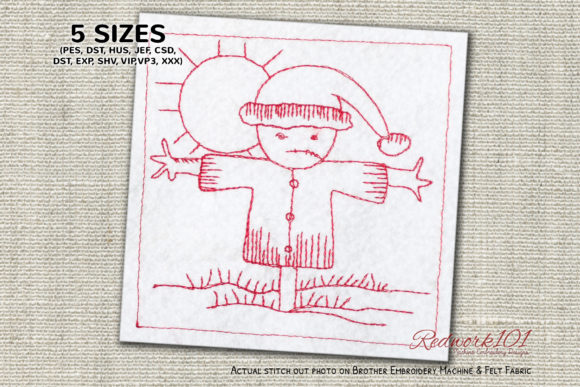
Christmas Scarecrow Bluework presents a rustic, friendly, and handmade aesthetic that feels both seasonal and timeless. The bluework style—typically characterized by blue thread on a light or natural ground—gives the design a classic, almost heirloom quality. This is not a loud or overly modern design. It feels welcoming, pastoral, and gently festive. For a small business, this visual personality can be a strong asset. It communicates warmth, tradition, and attention to detail. The scarecrow motif itself is approachable and nostalgic, which makes it suitable for brands that want to feel personal and community-oriented rather than corporate. The optional Box Stitch adds a framed, finished look, but the ability to skip it or change its color gives you control over how prominent the design appears on the finished product. As a designer, I appreciate that level of customization because it allows the embroidery file to be tailored to different fabric textures and product types.
Real-World Business Use: From Patches to Branded Merch
Small business owners looking for small business merch that stands out will find Christmas Scarecrow Bluework versatile across multiple formats. Let me run through the most common applications I see in my shop and how this design holds up in each.
Embroidered Patches and Branded Labels
This design works beautifully as an embroidered patch. The bluework style typically has clean lines and open areas, which means the patch can be produced with moderate stitch density that feels substantial without being stiff. For a café, bakery, or handmade shop, a patch featuring Christmas Scarecrow Bluework sewn onto aprons or work shirts creates a cohesive look. The optional Box Stitch can serve as a border for the patch, eliminating the need for a separate merrowed edge. If you skip the box, the design sits more organically on the fabric, which suits a rustic or farmhouse brand identity. I recommend testing the patch at a few sizes—perhaps 3 inches, 4 inches, and 5 inches—to see how the details scale. The digital embroidery file should be checked for stitch count and density before committing to a production run.
Cap Embroidery and Sleeve Accents
Cap embroidery presents unique challenges because of the curved surface and limited space. Christmas Scarecrow Bluework can work on a cap front if the design is scaled appropriately. Because the bluework style often relies on outline and fill stitches, the design needs to be clean enough to read at a smaller size. I suggest testing it at 2.5 to 3 inches wide on a cap. The scarecrow's face and hat should remain distinct. The optional Box Stitch may need to be omitted on a cap to keep the design compact and prevent distortion on the curve. For sleeve accents on jackets or work shirts, this design adds a subtle branded touch without overwhelming the garment. The bluework palette keeps it understated, which is ideal for a professional uniform environment.
Tote Bag Design and Apron Embroidery
Tote bag design is one of the most popular categories for small business merch, and Christmas Scarecrow Bluework fits well here. Tote bags offer a flat, stable surface, so the design stitches out cleanly. The bluework style looks especially good on natural cotton or linen totes, where the thread color contrasts nicely with the fabric. For apron embroidery, this design can be placed on the chest, bib, or lower pocket area. The optional Box Stitch can be used to frame the design on an apron, giving it a polished, finished look. If your business runs a seasonal promotion or holiday event, this design can be used as a limited-edition tote or apron to create urgency and customer excitement.
Custom Apparel and Product Packaging Accents
Beyond patches and tote bags, custom apparel like t-shirts, hoodies, and button-downs can carry this design as a chest logo or back accent. The bluework style is subtle enough that it does not compete with bold colors, but it still offers enough visual interest to be noticed. For product packaging accents, consider using a small embroidered patch or label on the outside of a gift box or bag. This adds a tactile, handmade element that customers remember. Handmade brands and Etsy sellers can use Christmas Scarecrow Bluework as a signature design asset across multiple product lines, building visual consistency and brand recognition.
Where to Use Christmas Scarecrow Bluework with Care
No design is perfect for every application, and Christmas Scarecrow Bluework has a few areas where you should proceed with caution. Based on my experience testing similar machine embroidery designs, here are the key considerations.
Small Patch Sizes and Tiny Lettering
If you plan to produce this design as a small patch—say under 2.5 inches—the details of the scarecrow may become muddled. The bluework style often relies on fine lines and open spaces, and at a very small scale, those lines can blur together. I recommend setting a minimum size of 3 inches for patches and 2.5 inches for direct embroidery on garments. If the design includes any text or fine details, test them at the intended size before production. The optional Box Stitch can help define the edges at smaller sizes, but be aware that it adds to the overall stitch count and density.
Cap Fronts and Curved Surfaces
As mentioned earlier, cap embroidery requires careful scaling. The curved surface of a cap front can distort a design that is too wide or has too many dense stitch areas. Christmas Scarecrow Bluework should be tested on a cap with the Box Stitch omitted to reduce rigidity. Use a lightweight stabilizer and a cap frame to keep the fabric taut. If the design puckers or pulls, consider reducing the stitch density or simplifying the fill areas. For curved surfaces like sleeve cuffs or collar points, keep the design small and simple.
High Stitch Density and Detailed Outlines
While bluework designs are generally not overly dense, the outline stitches and fill areas can add up. Check the stitch density of your embroidery file before production. If the density is high, the design may feel stiff on lightweight fabrics like t-shirts or blouses. It may also take longer to stitch out, which affects production time and cost. For high-density areas, use a quality stabilizer—cutaway for knits and tearaway for wovens—to prevent puckering. Test on a scrap of your actual fabric to see how the design behaves.
Textured Fabric and Dark Uniforms
Fabric texture matters. On heavily textured fabrics like fleece, terry cloth, or thick knits, the fine lines of Christmas Scarecrow Bluework may sink into the material and lose definition. Stick to smooth or medium-weight fabrics for best results. On dark uniforms, the bluework thread may not provide enough contrast. If your brand uses dark shirts or aprons, consider using a lighter thread color for the bluework effect, or test the design with a white or light blue thread to ensure visibility. The optional Box Stitch can be used in a contrasting color to help the design stand out on dark backgrounds.
Items That Need Frequent Washing
For aprons, work shirts, and tote bags that will be washed frequently, the durability of the embroidery is critical. Christmas Scarecrow Bluework should be stitched with high-quality polyester or rayon thread that resists fading and fraying. Use a dense enough stitch pattern to prevent pull loops, but avoid excessive density that can cause the fabric to pucker after washing. A medium-weight cutaway stabilizer is recommended for items that will see repeated laundering. Test wash a sample before committing to a full production run.
How This Design Affects Brand Identity and Customer Trust
Your choice of machine embroidery design directly impacts how customers perceive your brand. Christmas Scarecrow Bluework brings a handmade, artisan quality to any product. For a small business, this can be a powerful differentiator. In a world of mass-produced merchandise, an embroidered patch or custom apparel with a thoughtful design signals that you care about quality and detail. Customers notice when a product feels intentional. The bluework style, with its traditional stitching and modest palette, conveys authenticity and craftsmanship. It suggests that your business values tradition, care, and the human touch.
Using this design across your design assets—patches, aprons, totes, caps, and packaging—creates a cohesive brand identity. When a customer sees the same scarecrow motif on your staff uniforms, your tote bags, and your product labels, they begin to associate that image with your business. That recognition builds trust. It also makes your handmade product line feel more curated and professional. For Etsy sellers and craft business owners, Christmas Scarecrow Bluework can become a signature element that sets your shop apart. The optional Box Stitch gives you flexibility to adapt the design for different products while keeping the core motif consistent.
On the flip side, if the design is used poorly—stitched with incorrect thread colors, placed awkwardly on a garment, or produced with low-quality materials—it can damage your brand image. A puckered patch or a poorly scaled cap design looks unprofessional. That is why testing and quality control are essential. A printable mockup can help you visualize how the design will look on your products before you commit to production. Share the mockup with clients or customers for approval to ensure the design meets their expectations.
Practical Embroidery Notes for Production Success
Before you load Christmas Scarecrow Bluework into your machine, here are the practical steps I recommend based on my experience reviewing and producing similar digital embroidery files.
Test It in Black and White First
Before you choose thread colors, run a test stitch-out in black and white. This lets you see the design's structure, spacing, and detail without the distraction of color. You will immediately notice if any areas are too dense, too sparse, or poorly connected. The black-and-white test also helps you evaluate the optional Box Stitch: does it add value, or does it crowd the design? Make your decision about the Box Stitch based on this test.
Check If It Works at Small Patch Size
I mentioned this earlier, but it bears repeating. Christmas Scarecrow Bluework should be tested at the size you intend to use. If you plan to sell it as a 3-inch patch, stitch one out at that size. Look at the scarecrow's face, hat, and any fill areas. If the details are unclear, you may need to scale up slightly or simplify the design. The embroidery file should allow you to resize without losing quality, but always test the new size before production.
Review Thread Color Contrast
The bluework style traditionally uses blue thread on a light background, but you are not limited to that. For your brand, you might choose a different color that matches your logo or palette. Test the design with several thread colors on your actual fabric. Pay attention to contrast: the design should be clearly visible from a few feet away. If the contrast is too low, customers may miss the detail. If it is too high, the design may feel harsh. The optional Box Stitch can be used in a contrasting or matching color to frame the design and improve visibility.
Inspect Spacing and Confirm Hoop Size
Open the digital embroidery file in your software and inspect the spacing between elements. The scarecrow's features should have enough room to breathe. If the Box Stitch is too close to the main design, it may feel cramped. Check the hoop size required for your chosen size. A 4x4 hoop may work for smaller versions, but larger patches or direct embroidery may require a 5x7 or larger hoop. Confirm that the design fits within your hoop with at least half an inch of margin on all sides.
Test on Real Fabric with Proper Stabilizer
Every fabric behaves differently. Test Christmas Scarecrow Bluework on the exact fabric you plan to use for your products. Use the appropriate stabilizer: cutaway for knits, tearaway for wovens, and a water-soluble topping for napped fabrics like towels or fleece. The stabilizer should be hooped firmly but not stretched. After stitching, evaluate the design for puckering, thread breaks, or distorted shapes. Adjust your tension or stabilizer choice as needed.
Create a Mockup for Client Approval
If you are producing this design for a client or as part of a branded merchandise line, create a printable mockup showing the design on the actual product. A mockup helps everyone visualize the finished product and reduces the risk of miscommunication. Include the optional Box Stitch in one version and omit it in another so the client can choose. Mockups also help with marketing: you can use them on your website or Etsy shop to show customers how the design will look on a tote bag or apron.
Compare It Beside Other Design Assets
If your business already has existing design assets—a logo, a tagline, or other embroidery files—compare Christmas Scarecrow Bluework beside them to ensure visual consistency. The design should complement your other assets, not clash with them. If your brand uses bold, modern typography, a rustic bluework scarecrow may feel out of place. If your brand is warm, handmade, and seasonal, this design will fit right in. Consider how the design will look when placed next to a logo on a cap or chest.
Confirm Commercial Licensing Before Business Use
Before you use Christmas Scarecrow Bluework for any commercial embroidery project, confirm the licensing terms. The product description does not specify license details, so you must check with the seller or distributor. Some embroidery files are sold for personal use only, while others include commercial rights. If you are producing small business merch for sale, you need a commercial license. Do not assume that purchasing the file gives you the right to sell the finished products. Verify this before you invest time and materials into production.
Final Thoughts: Is Christmas Scarecrow Bluework Right for Your Business?
Christmas Scarecrow Bluework is a versatile, charming machine embroidery design that can elevate small business merchandise when used thoughtfully. Its bluework style offers a handmade, professional look that works well on patches, aprons, caps, tote bags, and custom apparel. The optional Box Stitch gives you flexibility to adapt the design to different products and brand identities. However, like any design, it has limitations. Small sizes, curved surfaces, high stitch density, and dark fabrics require careful testing and adjustment. For business owners who want to build a cohesive brand identity with a seasonal, rustic touch, this design is worth considering. Test it, mock it up, and verify your licensing before you commit to production. When done right, Christmas Scarecrow Bluework can become a memorable part of your brand's story and a trusted element of your product line.