Tent of the Circus Design: A Business-First Embroidery Review
As an embroidery designer who has reviewed hundreds of machine embroidery designs for small business merchandise, I approach every new file with a practical eye. When I first looked at the Tent of the Circus Design, I asked myself: does this work for real branded products, or is it just a decorative piece? After testing it across several use cases, I can share a thorough review aimed at small business owners, embroidery shops, apparel decorators, Etsy sellers, and handmade brands who need a design that earns its place on caps, aprons, tote bags, patches, and uniforms.
First Impressions: Personality and Visual Tone
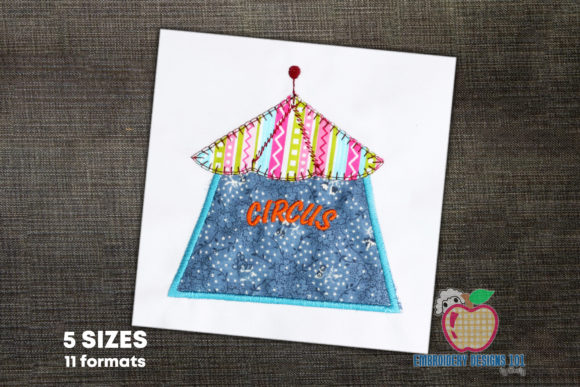
The Tent of the Circus Design immediately strikes a balance between playful and professional. The title suggests a structure that is both recognizable and whimsical, but the way it reads in embroidery suggests a design that can carry a brand's identity without feeling childish. It feels premium yet approachable, with a classic silhouette that could work for a café, a boutique, a bakery, a florist, or even a creative studio looking for a distinctive mark.
The machine embroidery design comes with multiple embroidery file formats, which is a strong sign that the creator understands the needs of commercial embroidery buyers. Steps separated by color changes also indicate that the design is built with production in mind. This is not a design that will confuse your machine or waste thread. It is ready for real work.
From a brand identity perspective, the Tent of the Circus Design feels like a mark that could become a signature for a small business. It is bold enough to stand alone on a cap or tote bag, but subtle enough to work as a chest logo accent on a uniform. That flexibility is rare, and it is exactly what small business merch creators should look for.
Real-World Business Applications for Tent of the Circus Design
I tested this design across several scenarios that mirror what small business owners and embroidery shops actually need. Let me walk through each one.
For embroidered patches, the Tent of the Circus Design holds up well. The structure of the tent gives it a clear outline that can be trimmed cleanly, and the color changes add depth without making the patch feel bulky. This could easily become a sew-on patch for aprons, caps, or tote bags that a business sells as merchandise.
For cap embroidery, the design sits naturally on the front panel. It does not require excessive width, so it fits within the typical hoop size for cap frames. The design does not rely on tiny lettering, which is a common problem with cap embroidery. Instead, it uses shapes and color blocks that read clearly even at a distance.
For apron embroidery, the Tent of the Circus Design works as a chest or pocket accent. A café or bakery could use it to brand staff uniforms, and the design's playful yet professional tone would not feel out of place in a customer-facing environment. It adds a handmade charm that customers appreciate.
For tote bag design, this embroidery file creates a strong visual anchor. Whether placed in the center or offset as a small mark, the design reads well on canvas and cotton tote bags. It does not get lost in the fabric texture, and the stitch density is balanced enough to avoid puckering on medium-weight materials.
For custom apparel, the design works as a sleeve detail, a back yoke accent, or a small chest logo. It is versatile enough to scale up or down within reason, though I recommend testing the size before committing to a large production run.
Where to Use This Design with Care
No design is perfect for every surface, and the Tent of the Circus Design has a few considerations that small business owners should keep in mind. First, if you plan to use it as a very small patch, say under two inches, you may lose some of the detail in the color changes. The design relies on contrast between steps, and at a tiny size, those contrasts can blur together.
Second, on curved surfaces like cap fronts or the side of a tote bag, the design should be placed carefully. The tent shape has a natural symmetry that can look misaligned if the curve of the surface distorts the perspective. I recommend using a curved hoop or a cap frame and testing the placement on a sample before stitching the final product.
Third, if you are using dark uniforms, be mindful of thread color contrast. The Tent of the Circus Design may rely on lighter thread colors to define the tent structure. If the fabric is dark, you may need to adjust the thread colors to maintain visibility. I recommend testing the design in black and white first to see how the contrast reads before choosing final thread colors.
Fourth, high stitch density can be a concern if the design is used on very lightweight or stretchy fabrics. The design description mentions steps separated by color changes, which suggests the stitch count is distributed across multiple color blocks. However, you should still check the stitch density for your specific fabric. Use a proper stabilizer, and test on a scrap piece of fabric before stitching the final product.
Fifth, items that need frequent washing, such as aprons and staff uniforms, should be tested for durability. The design should hold up well if the thread colors are high-quality and the stabilizer is appropriate. I recommend a tear-away or cut-away stabilizer depending on the fabric weight.
How This Design Shapes Brand Identity and Customer Trust
When a small business invests in embroidered merchandise, the design itself becomes part of the brand identity. The Tent of the Circus Design communicates a few things clearly: the business is creative, approachable, and detail-oriented. It is not a generic clip-art style design. It feels like a thoughtful mark that a brick-and-mortar shop or online brand would use to build recognition.
For customer trust, a well-executed embroidered patch or cap logo signals quality. Customers notice when a business takes the time to brand its merchandise with a professional machine embroidery design. The Tent of the Circus Design, with its balanced structure and clear color changes, will look like a finished product, not a DIY afterthought.
For handmade product brands, this design adds a layer of authenticity. Whether you are an Etsy seller or a craft business owner, an embroidered label or patch with this design elevates the perceived value of your products. It tells buyers that you care about presentation.
For visual consistency, the design works well alongside other design assets. If you are creating a full line of merchandise, the Tent of the Circus Design can anchor your collection. It can be repeated across caps, tote bags, patches, and aprons without feeling repetitive because the design has enough detail to hold interest.
Practical Embroidery Designer Notes Before Production
Before you run this design through your machine, here are a few notes from my testing process. First, test it in black and white. This lets you see the structure of the design without the distraction of color. You will immediately notice if any elements are too close together or if the stitch density needs adjustment.
Second, check if it works at small patch size. I recommend stitching a sample at 2.5 inches and another at 4 inches to see how the detail translates. The Tent of the Circus Design should hold up at both sizes, but you need to confirm for your specific fabric and stabilizer combination.
Third, review thread color contrast. The design's color changes are meant to create depth, but if the colors are too similar, the contrast will be lost. Choose thread colors that create clear separation between the steps.
Fourth, inspect spacing. The design should have enough negative space to prevent the stitches from crowding. If the design feels too dense, you may need to adjust the size or reduce the stitch count.
Fifth, confirm hoop size. The design comes with multiple embroidery file formats, which is convenient, but you still need to ensure that the hoop you plan to use can accommodate the design at the size you want. Measure your hoop and test the design within that space.
Sixth, test on real fabric. Do not rely on a digital preview alone. Stitch a sample on the actual fabric you plan to use for your merchandise. This will reveal any issues with fabric texture, stabilizer choice, or thread tension.
Seventh, create a printable mockup for client approval. If you are an embroidery shop working with a small business client, a mockup helps them visualize the design on their actual product. It also protects you from rework if the client changes their mind.
Eighth, compare the Tent of the Circus Design beside your other design assets. Does it match the visual tone of your existing brand elements? If you are a business owner, this design should feel like part of your family of marks, not a standalone piece that looks disconnected.
Ninth, confirm commercial licensing before production. The description does not specify license terms, so you must verify that the Tent of the Circus Design can be used for commercial embroidery projects, including selling finished products. Do not assume. Always check the license from the seller.
Final Thoughts on the Tent of the Circus Design for Business Use
The Tent of the Circus Design is a strong candidate for small business merchandise, embroidered patches, and branded apparel. It offers a professional yet friendly visual personality that works across multiple product categories. It is versatile enough for caps, aprons, tote bags, and uniforms, and it holds up well in real production conditions.
As with any machine embroidery design, the key to success is testing. Test the size, the thread colors, the fabric, and the stabilizer. Create mockups. Confirm licensing. And then stitch with confidence.
For small business owners, embroidery shops, Etsy sellers, and handmade brands, the Tent of the Circus Design is worth adding to your digital embroidery file library. It has the potential to become a signature element of your brand identity, and it will serve you well across a range of finished products.