Happy Devil Bluework: A Designer’s Review
As an experienced embroidery designer who regularly evaluates machine embroidery designs for real client projects, I’ve learned to look beyond the digital preview. A file might look charming on screen, but its true value only reveals itself under the needle. I recently tested the “Happy Devil Bluework” design for a custom order, and I want to share my practical observations for anyone running a craft business, selling on Etsy, or producing handmade products for a fall market.
Why the “Bluework” Style Matters for Your Shop
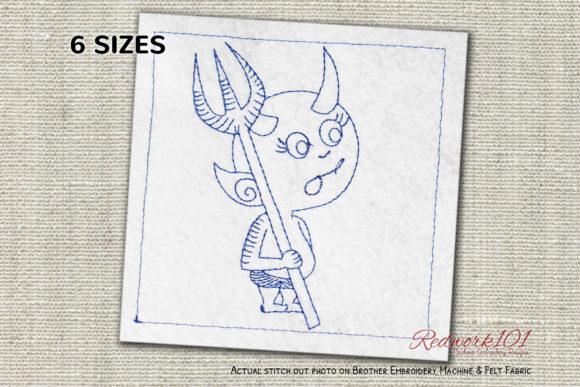
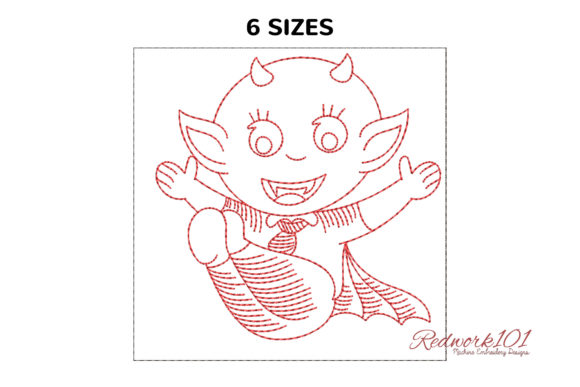
The first thing I noticed about this design is its deliberate style. “Bluework” traditionally refers to a monochromatic embroidery technique, often using blue thread on a light background. It carries a classic, hand-drawn, and slightly vintage feel. This is not a dense, cartoonish caricature. The Happy Devil has a clean, open aesthetic that relies on clear outlines and simple fill stitches. For a small business, this is a strategic advantage. It appeals to customers who want Halloween-themed items without the aggressive or gory visuals. The “happy” expression is genuine and approachable, making it suitable for family-friendly products, children’s apparel, and home decor. This design reads as artisanal, not mass-produced, which adds perceived value to a finished product.
The Optional Box Stitch: A True Design Asset
One of the most important details in the product description is the outer box stitch. The fact that it is optional, and that the color can be skipped directly in your machine, is a critical feature for any embroidery project. In my workflow, this transforms a single embroidery file into two distinct design assets.
When you keep the box:
The outer frame gives the Happy Devil a structured, badge-like appearance. This is ideal for embroidered patches, chest placements on sweatshirts, or center designs on tote bags. It creates a contained, professional finish that looks intentional on caps or aprons. The box provides a clear boundary that helps the design stand out, especially on busy or textured fabrics.
When you skip the box:
Removing the box allows the Happy Devil to float freely. This is a much more versatile option for curved surfaces like caps, or for small items like baby onesies and tea towels. It also gives the design a lighter, more whimsical feel. The ability to choose between these two options during the hooping process means you can adapt the same digital embroidery file to multiple product lines. For an Etsy seller or small shop owner, this flexibility reduces your inventory of design assets while expanding your product range.
I strongly advise you to inspect your specific embroidery file (PES, DST, etc.) to confirm that the box is on a separate color stop. This will allow you to easily skip it at the machine without needing to edit the file. This is a simple check that saves time and prevents thread waste.
Stitching It Out: Fabric, Stabilizer, and Thread Choices
I tested the Happy Devil Bluework on two very different materials: a structured cotton twill tote bag and a medium-weight cotton-poly sweatshirt fleece. Here is what I observed about its performance.
On cotton twill:
The satin stitches and fill stitches laid down cleanly with minimal adjustment. The stitch density felt moderate, which is a good sign for a design that will be used on tote bags or home decor items. I used a medium-weight tear-away stabilizer, and the results were crisp. The design maintained its shape without distortion.
On sweatshirt fleece:
This is where the design’s simplicity works in its favor. The open areas and clear outlines mean it does not overwhelm the fabric. However, I did need to use a medium-weight cut-away stabilizer and a water-soluble topping to prevent the stitches from sinking into the fleece. The devil’s horns and tail are detailed enough to require good stitch definition. Without the proper stabilizer, those details can become muddy. This is a common consideration for any machine embroidery design used on knit fabrics.
Thread color considerations:
The name suggests blue, and a deep navy or traditional indigo on natural linen creates a beautiful, classic look. For a bolder, more modern feel, I also tested the design in bright orange and white on a black sweatshirt. The design read very well with high contrast. If you are making a handmade product for a customer who wants a specific color palette, this design is flexible enough to accommodate that request. Always test your thread colors on a scrap of your final fabric to confirm the contrast and mood.
Where Happy Devil Bluework Fits in Your Product Line
This design is a natural fit for Halloween, but its “happy” nature extends its usability into the entire fall season. Here are the specific applications where I believe it will perform best for a craft business.
- Custom apparel: Sweatshirts, t-shirts, and denim jackets. The bluework style has a vintage, artsy feel that supports a higher price point for boutique brands.
- Tote bags and market bags: This is a perfect product for fall farmers' markets or holiday craft fairs. The design is quick to stitch and visually appealing.
- Embroidered patches: Because of the structured box option, this design digitizes well as a patch. Stitch it out on twill, cut it close, and finish the edge. Patches are a low-cost, high-margin item for Etsy sellers.
- Baby and children’s items: The non-scary expression makes it safe for onesies, bibs, and child-sized aprons. Parents appreciate holiday designs that are cute rather than frightening.
- Home decor: Pillow covers, tea towels, and napkins. A set of tea towels with the Happy Devil in different thread colors would be a strong holiday gift item.
- Personalized gifts: The design leaves enough visual space to add a name or monogram if you are using a multi-needle machine or carefully layering a second design.
Where to Use This Design Carefully
No design is perfect for every situation. Here are the scenarios where I recommend caution with the Happy Devil Bluework.
- Small hoop sizes: If you are limited to a 4x4 hoop, check the actual dimensions of the design. The outer box, if included, may push the design to the edge of your hoop, increasing the risk of shifting or distortion. I recommend measuring the design width and height before relying on it for a small hoop project.
- Textured or bulky fabrics: Terry cloth, heavy fleece, or thick knits can swallow the fine details. The bluework style relies on clean lines. Use a heavy-duty cut-away stabilizer and a water-soluble topping to keep the stitches visible.
- Stretchy fabrics: T-shirts with high spandex content can pucker if the stabilizer is not firm enough. The linear nature of the design means any puckering will be very visible. I recommend a no-stretch cut-away stabilizer for knit fabrics.
- Dark fabric with dark thread: This is a practical trap. If you stitch a dark blue design on a black or navy fabric, it will disappear. The design will lose its impact. Use a contrasting thread color, such as white, yellow, or light blue, to ensure the design pops on dark backgrounds.
- Curved surfaces like caps: The outer box may not conform well to the curve of a cap front. If you are doing a cap project, I strongly recommend skipping the box and using the devil motif alone. This will give you a much more flexible placement that follows the curve naturally.
Practical Designer Notes for Your Workflow
Before you use this embroidery file for a client project or for your own Etsy inventory, here are the steps I always follow. These apply to any digital embroidery file, and the Happy Devil Bluework is no exception.
Test on scrap fabric first. This is non-negotiable. Stitch the design on a sample of your final fabric. Check the stitch density, thread tension, and color placement. Look for any gaps in the satin stitching or uneven fill stitches. A test stitch reveals issues that a digital preview cannot.
Check the box stitch layering. The product description clearly states that the outer box color can be skipped. Confirm that your machine reads this as a separate color stop. If you plan to offer products both with and without the box, you need to know how to execute this smoothly in your production run.
Review the stabilizer choice. For most cotton and linen projects, a medium-weight tear-away stabilizer will work well. For knits, stretchy fabrics, or high-use items like tote bags, I recommend a cut-away stabilizer. This ensures the design remains stable through repeated washing and wear.
Confirm the licensing terms. If you are a small business owner, Etsy seller, or commercial embroiderer, you must verify the license that comes with the Happy Devil Bluework design. Can you sell the finished product? Do you need to credit the designer? Is there a limit on the number of items you can produce? Understanding the licensing terms protects your business and respects the work of the digitizer. This is a standard step when using design assets for commercial embroidery.
Use mockups for your shop. Before stitching a batch of items, I always create a printable mockup or a digital preview to show customers how the design will look on a specific product, such as a tote bag design or a sweatshirt embroidery placement. This helps with buyer engagement and reduces the chance of a custom order misunderstanding. The clean, defined shape of the Happy Devil Bluework makes it very easy to visualize in a mockup.
Why This Design Earns Its Place in My Active Files
The Happy Devil Bluework is a well-conceived machine embroidery design. It offers a specific mood that fills a gap in the Halloween market. It is not a generic cartoon. It is a stylized, artful piece that feels more like a specialty boutique item than a mass-produced patch. The optional box stitch provides real, practical value for a craft business by allowing you to adapt the same design to different product categories. It stitches well on a variety of fabrics when the correct stabilizer is used, and its simple construction makes it a reliable choice for small batch production.
For designers, Etsy sellers, and small shop owners looking for a versatile, customer-friendly Halloween design, this is a strong option. It is professional enough for commercial use, charming enough for personalized gifts, and flexible enough to become a staple in your seasonal product lineup. I recommend adding it to your digital embroidery file collection, testing it with your specific thread colors and fabric choices, and seeing how it performs in your own workflow. It is a design that respects your time, your machine, and your customers. That is the kind of design asset that builds a successful embroidery project.